
SyMAP MFN is live. GENEROUS, GLOBE and GUARD arrived inside seven weeks and each one works differently. This release runs all three on one portfolio and one set of reference prices, so what comes out is a single combined exposure figure with each model’s contribution attached to it.
Originally published April 2026, when SyMAP MFN first went live, and left here as written. A fourth pathway has since been added for the voluntary manufacturer agreements, along with a Section 232 tariff overlay and the forecasting and optimisation work described at the end of this post. For where things stand now, see SyMAP MFN, Introducing SyMAP 2.0 and the full release notes.
Eleven months ago, international prices were an ambition in US drug pricing policy. They are now written into three separate CMS models, each with its own programme, its own benchmark rules and its own start date.
The sequence was quick. A Most Favored Nation Executive Order in May 2025 set the direction. CMS unveiled GENEROUS for Medicaid on 6 November 2025. The proposed rules for GLOBE and GUARD followed in December. Seven weeks from the first model to the third, after a decade in which US and ex-US pricing were run as separate disciplines by separate people.
We launched SyMAP IRP in September to model how a price moves through a reference network outside the US. The American models need the same engine pointed at a different question, which is what SyMAP MFN is.
GENEROUS, GLOBE and GUARD land on one portfolio
The three do not differ much in intent. They differ in almost everything else: which programme they sit in, how the benchmark is calculated, what it gets compared against, and when any of it takes effect.
GENEROUS, Medicaid
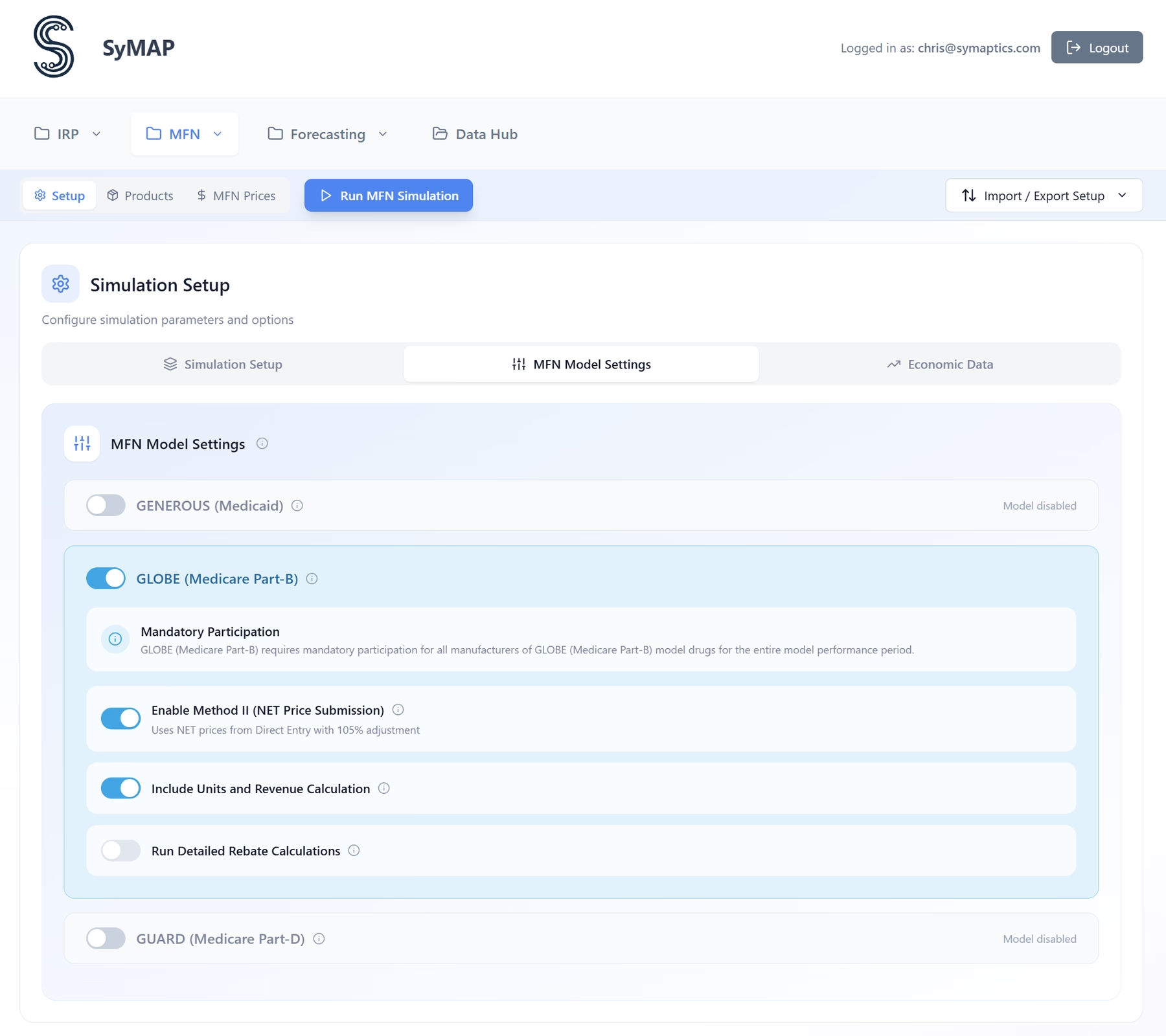
Voluntary, running 2026 to 2030, and it reaches net prices rather than list. The benchmark is the second-lowest PPP-adjusted net price from a basket of eight, delivered through supplemental rebates against a guaranteed net unit price.
GLOBE, Medicare Part B
Proposed as mandatory for qualifying physician-administered drugs from October 2026, using the higher of Method I and Method II across nineteen OECD countries. Tested in randomised geographies, so exposure depends on where your volume sits.
GUARD, Medicare Part D
The same nineteen-country benchmark reaching retail pharmacy drugs from January 2027, but through the inflation-rebate calculation rather than reimbursement. Different products, different mechanism, different year.
Each of those can be modelled on its own, and each answer is defensible in isolation. What they cannot be is added together. They draw on overlapping reference baskets, they land on the same portfolio, and in places they reach the same product through different channels. Cut a net price in Germany and you have moved the GENEROUS benchmark, the Method II side of GLOBE and the Method II side of GUARD at once, each on its own timetable and each with a different threshold to cross.
That overlap is the interesting part, and it only exists once all three models are looking at the same data.
What SyMAP MFN models
All three run on one dataset, with the same reference prices, the same portfolio and the same benchmark construction feeding each of them:
- All three models side by side on one set of products, prices and volumes, reported as combined MFN exposure with attribution back to each model
- Benchmark construction you can inspect: the country basket, the price type, the FX rate and date, and which comparator product matched
- Net price logic, so rebates, discounts and portfolio-wide clawbacks sit inside the calculation rather than being applied to the output afterwards
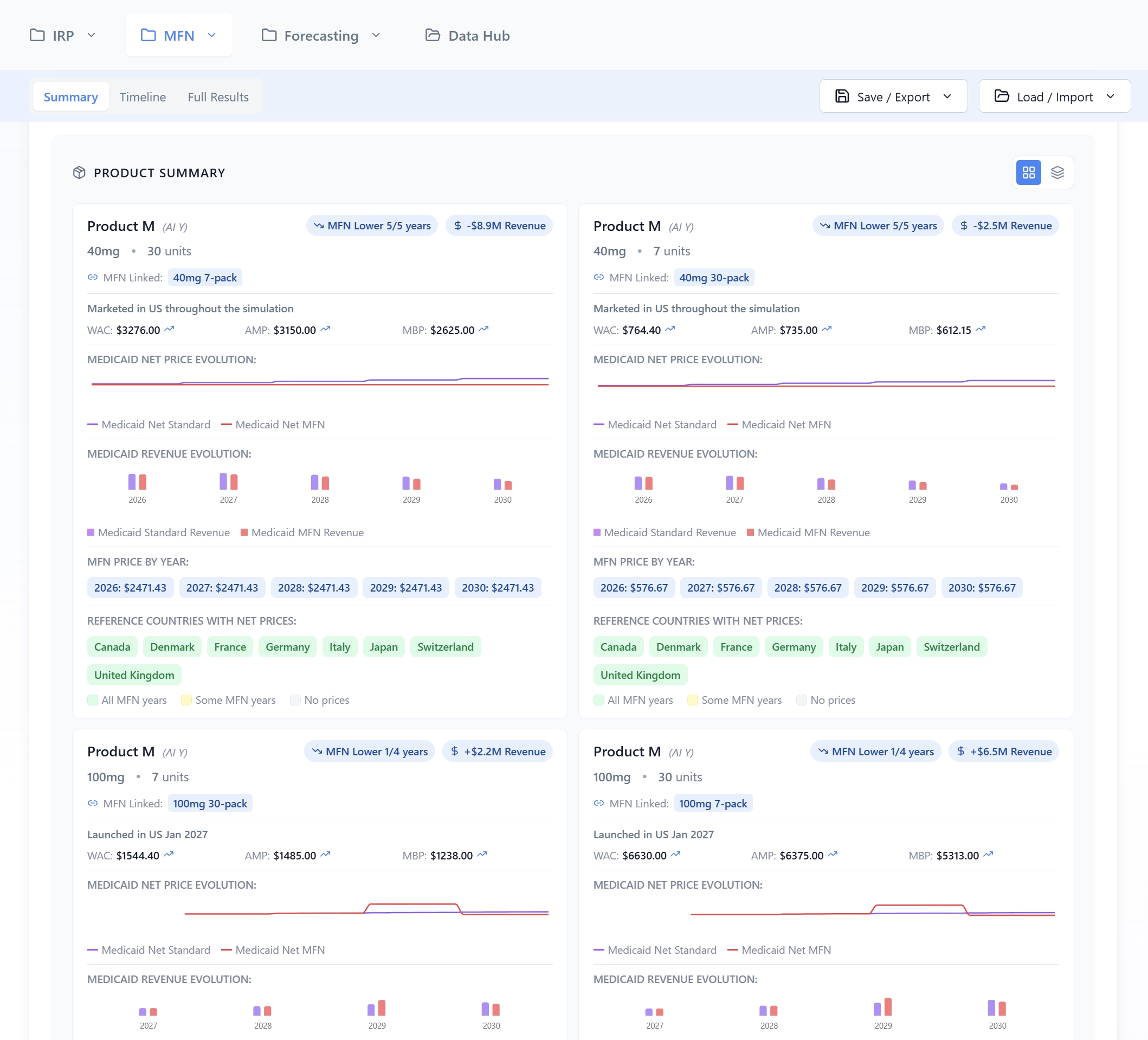
- Rebate modelling across basic, inflationary and MFN supplemental rebates, with multi-year cumulative obligations
- Revenue impact against standard pricing, channel by channel, so the answer is money rather than a price gap
- Scenario comparison, putting two MFN strategies side by side on prices, rebates, key events and revenue, with the point where they diverge visible
- Geographic weighting for the models tested on randomised geographies instead of the whole programme
- Multi-year timelines, so a benchmark set in one year and a price change in another do not have to be reconciled by hand
- The international reference pricing engine underneath, because a US benchmark is built from ex-US prices and those prices move
- An event log recording every assessment and recalculation, exportable
The MFN benchmark is where the argument happens
Most disagreements about MFN exposure turn out to be disagreements about the benchmark rather than about the policy, so the benchmark is the part we made most visible.
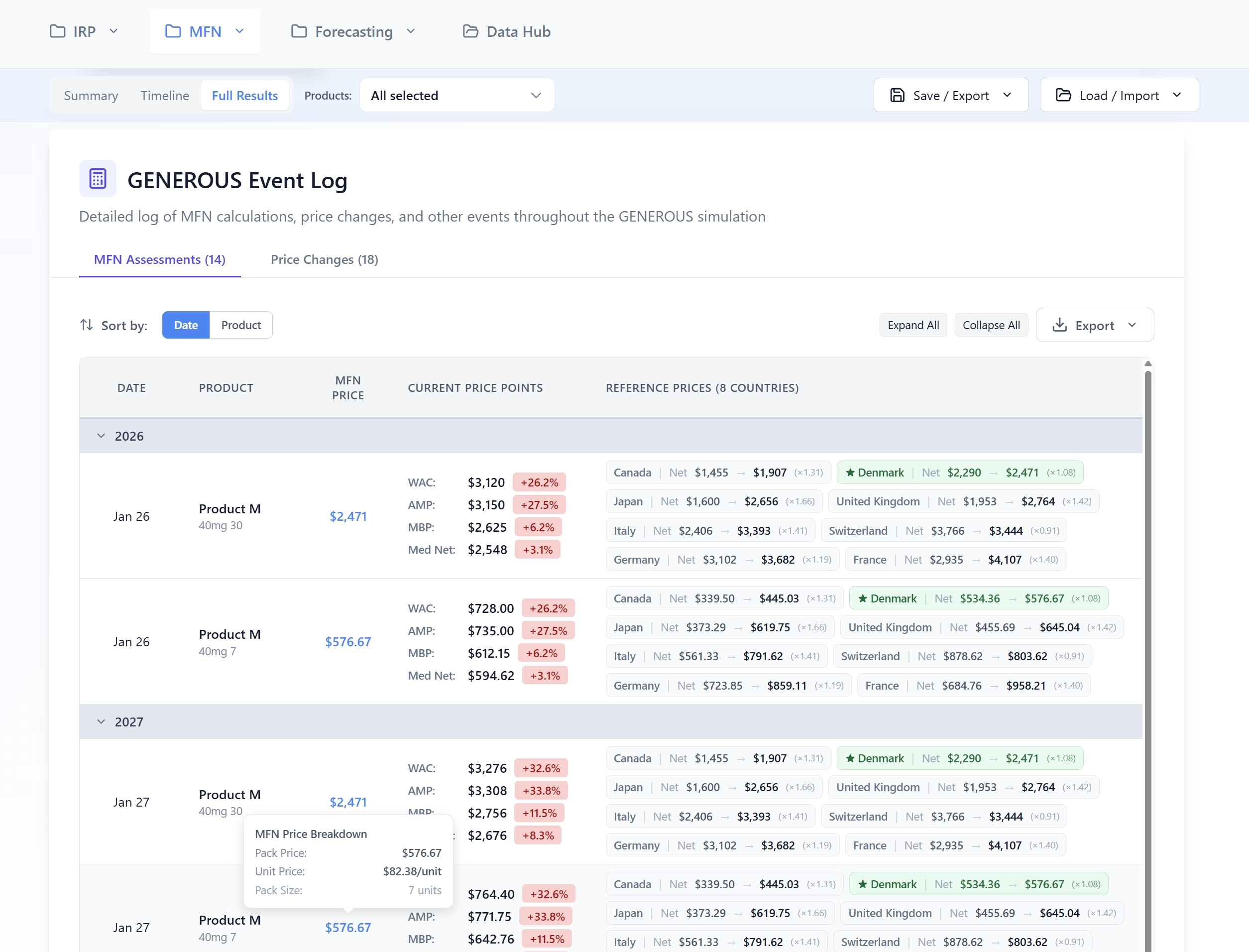
The three models do not even agree on the arithmetic. GENEROUS takes the second-lowest PPP-adjusted net price from eight countries. GLOBE and GUARD take the higher of Method I and Method II across nineteen. Second-lowest hands anyone negotiating against you a single discrete figure to move; the higher of two methods is a different exposure with a different sensitivity. Both need to be shown as the calculation they are, not as a number that has already been settled.
A reference price here is net of discounts, rebates and concessions, including portfolio-wide clawbacks of the kind the UK’s VPAG applies. Baskets are configurable and the aggregation rule is explicit. Every reference price opens up: the formula, the basket it drew from, the products it matched inside that basket, the exchange rate and the date it was taken.
That matters more here than in ordinary reference pricing work, because a benchmark that fixes at launch and then stays fixed is a number you will be arguing about for years. We picked those mechanics apart in The Fine Print.
An assistant you can argue with
The assistant reads the same outputs you do and writes up what moved the result: which model is carrying most of the exposure, which markets are setting the benchmark, where the sensitivity actually sits. When it proposes a change it names the calculation it is reasoning from, so the disagreement can be about the evidence.
The controls around it are the same as everywhere else in the platform. An administrator defines what the assistant may propose. Anything that changes the model waits for a person to confirm it. Permissions are set by role, and actions, confirmations and rejections are logged, with the log available to download.
That is worth more here than in most of our work. An MFN number ends up in front of a board, or in a conversation with a payer, and it has to survive being asked six months later how it was reached.
Who SyMAP MFN is for
US pricing teams who now have three models to answer for, and global teams who have worked out that their ex-US price list has become an input to a US number. Four questions come up more than the rest:
What is our combined exposure?
Across all three models, on one portfolio, with the overlaps handled rather than double counted.
Which model hurts most, and where?
Attribution by model, product and channel, so mitigation goes where it changes the answer.
What does our ex-US price list do to our US benchmark?
The reference network traced through to the benchmark, which is the connection most models leave out.
Can we defend this number?
Every figure traceable to a formula, a basket, a matched product and an FX rate on a date.
If you would rather have the analysis than the software, we also run this as a pricing analysis project and hand back the interpretation alongside access to the model.
What comes next
Two things are next on the roadmap.
The first is the voluntary agreements. Manufacturers are signing bilateral MFN commitments with the Administration, and those commitments reach into channels the three CMS models never touch. A fourth pathway alongside the mandatory three is the next model to build.
The second is optimisation. Scenario comparison already puts two MFN strategies side by side and shows you where they diverge, which is the right tool once you have a shortlist. What comes after it is search. A launch order across twenty markets, a price corridor in each and a policy posture in the US is a far bigger space than a shortlist can cover, so the next step is a global pricing optimiser: give it the goal and the levers you are willing to pull, let it work through the combinations, and have it show why the strategy it lands on wins, the same way the benchmarks show their working today.
Both will be built the way this release was. Real policy mechanics, calculations you can open up, and an assistant that asks first.
The short version
GENEROUS, GLOBE and GUARD are three different mechanisms, on three timetables, pointing at overlapping reference baskets and landing on the same portfolio. Run separately they produce three numbers that will not add up. SyMAP MFN runs them together, on one dataset, with the benchmark construction visible, the revenue impact attached and every result traceable.
If your MFN exposure currently sits in three workbooks that disagree with each other, that is the problem this was built for.
Chris McDonald PhD
Director & Founder, Symaptics
info@symaptics.com