
SyMAP 2.0 is here, and it is our biggest release yet. Reference pricing and US MFN policy now run as one simulation instead of one feeding the other by hand. The voluntary agreements get a deal designer of their own. And Optimizer Studio searches the strategy space for you, with an assistant that can act on what it finds.
When we built the first version of SyMAP, the question teams brought us was “what happens to our price?” Model an IRP cascade, stress-test an MFN scenario, watch the number move. That question has changed. Most Favored Nation pricing now reaches into Medicaid, Medicare and the commercial market, Section 232 tariffs have been in force at the border since 31 July, and the list of manufacturers signing voluntary agreements keeps growing. What teams ask now is “what should we do?”
Answering that took three things, and they are the three pillars of this release. The models had to stop being separate. The decision most US teams are actually facing had to become something you can model as a decision rather than as a policy. And testing scenarios one at a time had to stop being the only way to find a good one.
In this release: one simulation from market prices to revenue · voluntary agreements and the MFN Deal Designer · Optimizer Studio
One platform, three ways in
One modular platform, one dataset, and three ways in depending on the question in front of you.
SyMAP Global Pricing
The full global picture: end-to-end pricing strategy with patient and revenue forecasting and an optimisation engine. For teams answerable for every market and every channel.
SyMAP MFN
The US policy detail: all four MFN pathways (GENEROUS, GLOBE, GUARD and now voluntary agreements), with scenario comparison and a Section 232 tariff overlay.
SyMAP IRP
International reference pricing simulation with configurable country rules, your own custom reference formulas, and AI that explains every result.
The three big changes in SyMAP 2.0
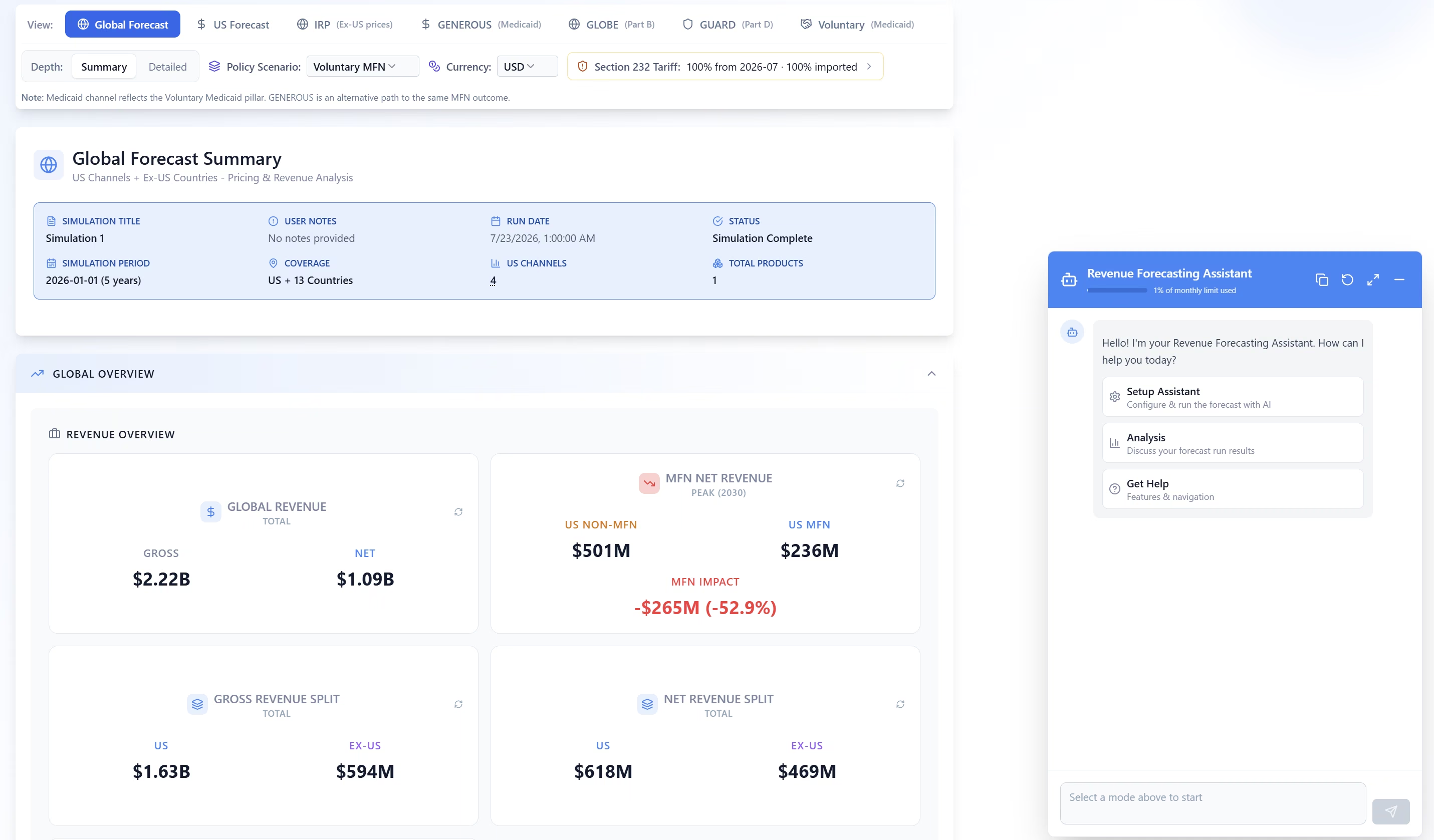
Reference pricing, MFN and revenue in one simulation
Reference pricing and MFN used to be two separate exercises. You built the international reference pricing model, saved the results, and loaded them into the MFN model as inputs. Every change to an assumption started the sequence again, and any two versions of the answer could disagree. They are one run now. Change a price in Germany and the reference cascade, the US benchmarks it feeds, the rebates and the multi-year revenue across US channels and international markets all move together, with no export in the middle. Every run can write its own first-draft analysis: the drivers, the risks, and what changed since last time.
- Build the IRP model and run it
- Export the reference prices
- Load them into the MFN model as inputs
- Run the MFN model
- Build the multi-year revenue forecast in a separate model
- Change one assumption and start again at step one
- Set your portfolio, prices and country rules
- Run once. Prices, benchmarks, rebates and revenue resolve together
Voluntary MFN agreements: the fourth pathway, and the MFN Deal Designer
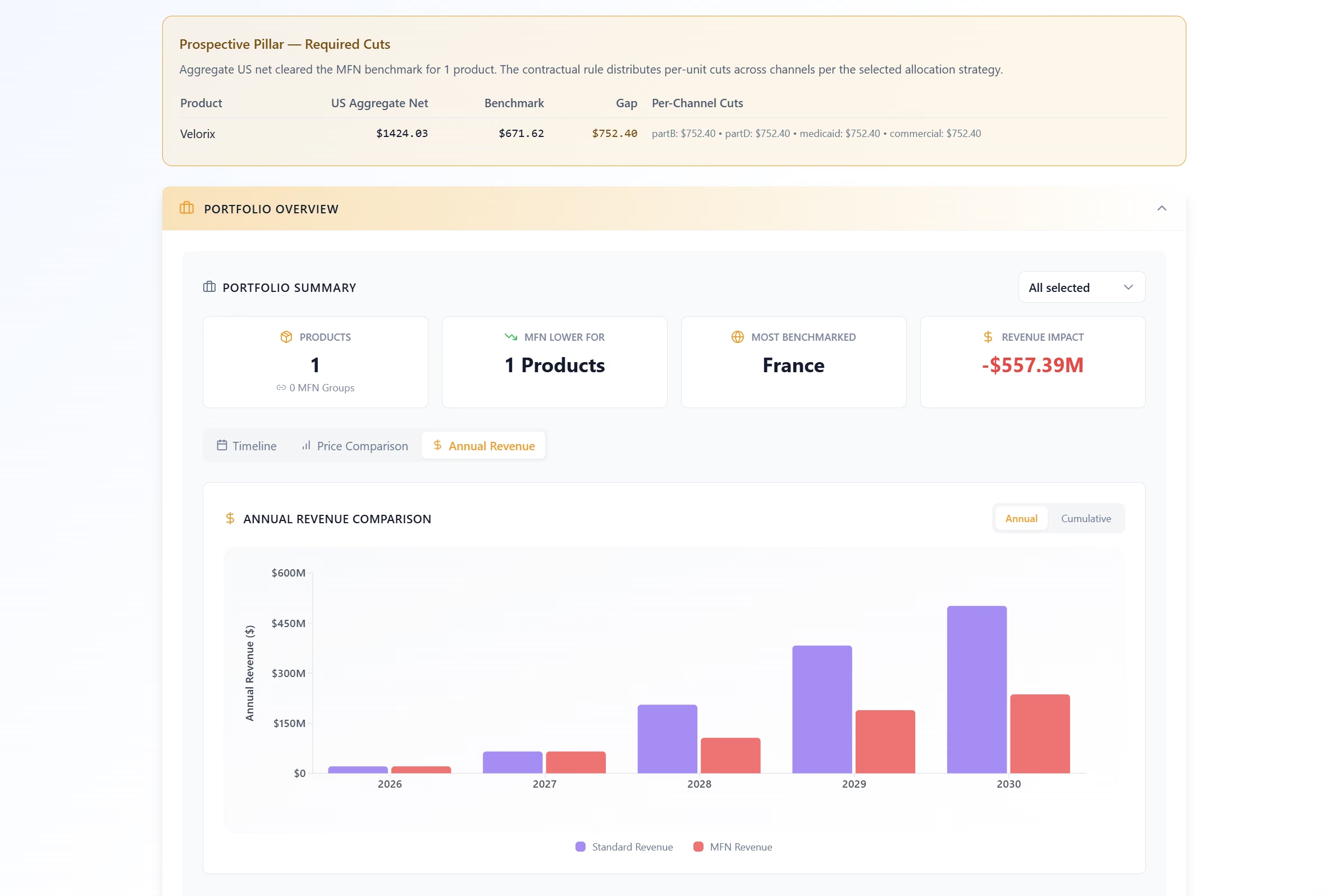
The biggest live decision for US pricing teams is whether to sign a voluntary MFN agreement, and on what terms. 2.0 adds a fourth MFN pathway and the MFN Deal Designer, a place to design the deal itself: set your own start date, participation timing and channel scope, with existing drugs following the Medicaid route and new launches the prospective route automatically, and per-drug overrides where you need them. Then put the deal you are contemplating up against GENEROUS, GLOBE and GUARD, and against no policy at all. Layer Section 232 tariff assumptions over any of it, because the real trade-off is tariff relief against years of pricing exposure, and it should be visible in one picture. We set out the shape of that decision in The Art of the MFN Deal.
Optimizer Studio, and AI that can act on it
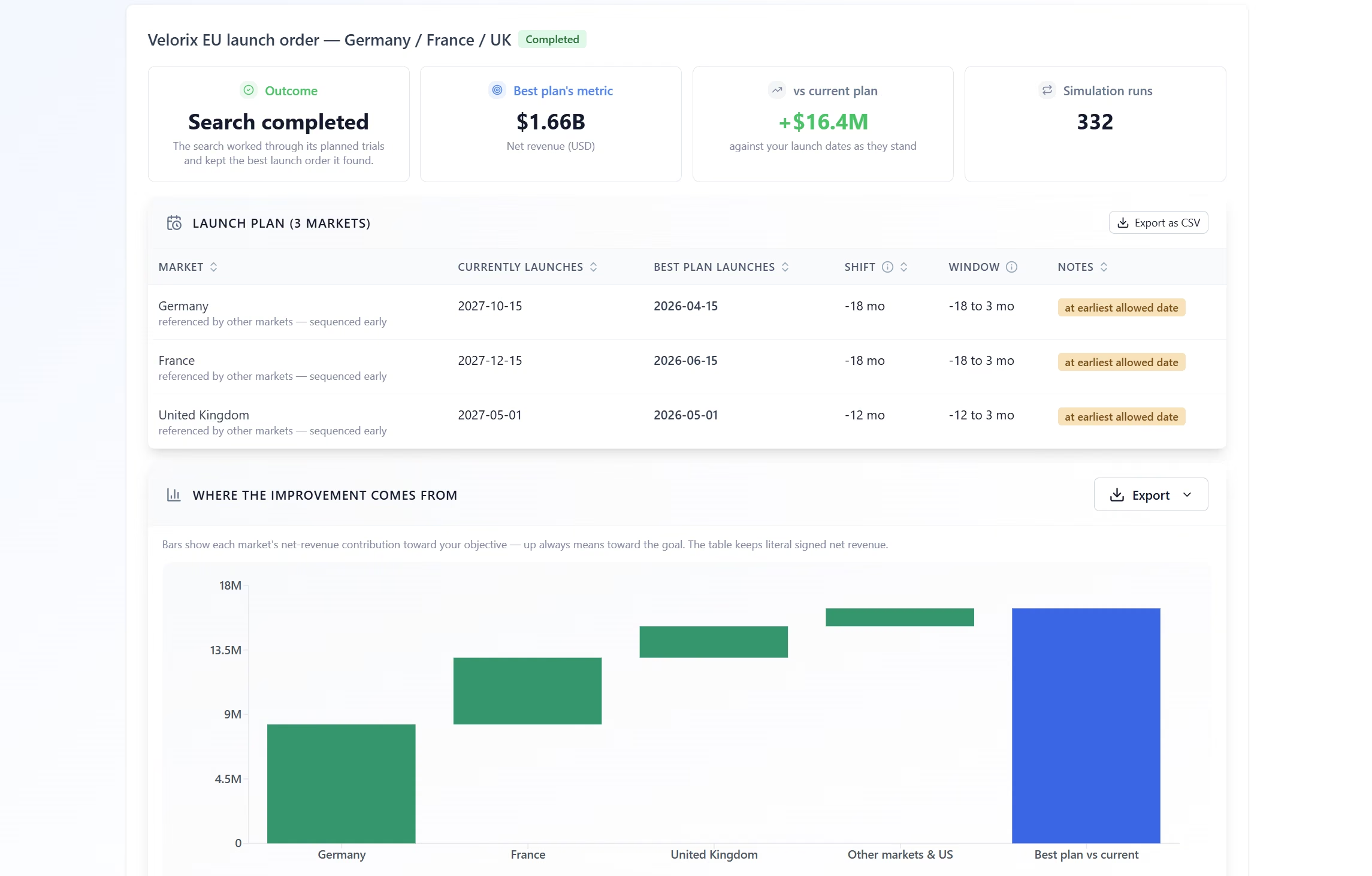
Testing scenarios one at a time only takes you so far. Give Optimizer Studio a goal and the levers you are willing to pull, whether that is launch timing and order, the price in each market, or your US pricing choices, and it searches the combinations. Then it shows its working: a driver waterfall breaks the winning strategy down factor by factor, so the recommendation is explainable rather than a black box. The assistant can now put forward optimisations of its own and, once approved, carry them out. The controls around it are deliberately dull: an administrator defines which actions it may propose, a person confirms anything that changes the model, and every proposal and decision is recorded.
Also in 2.0
The release goes well beyond the headlines:
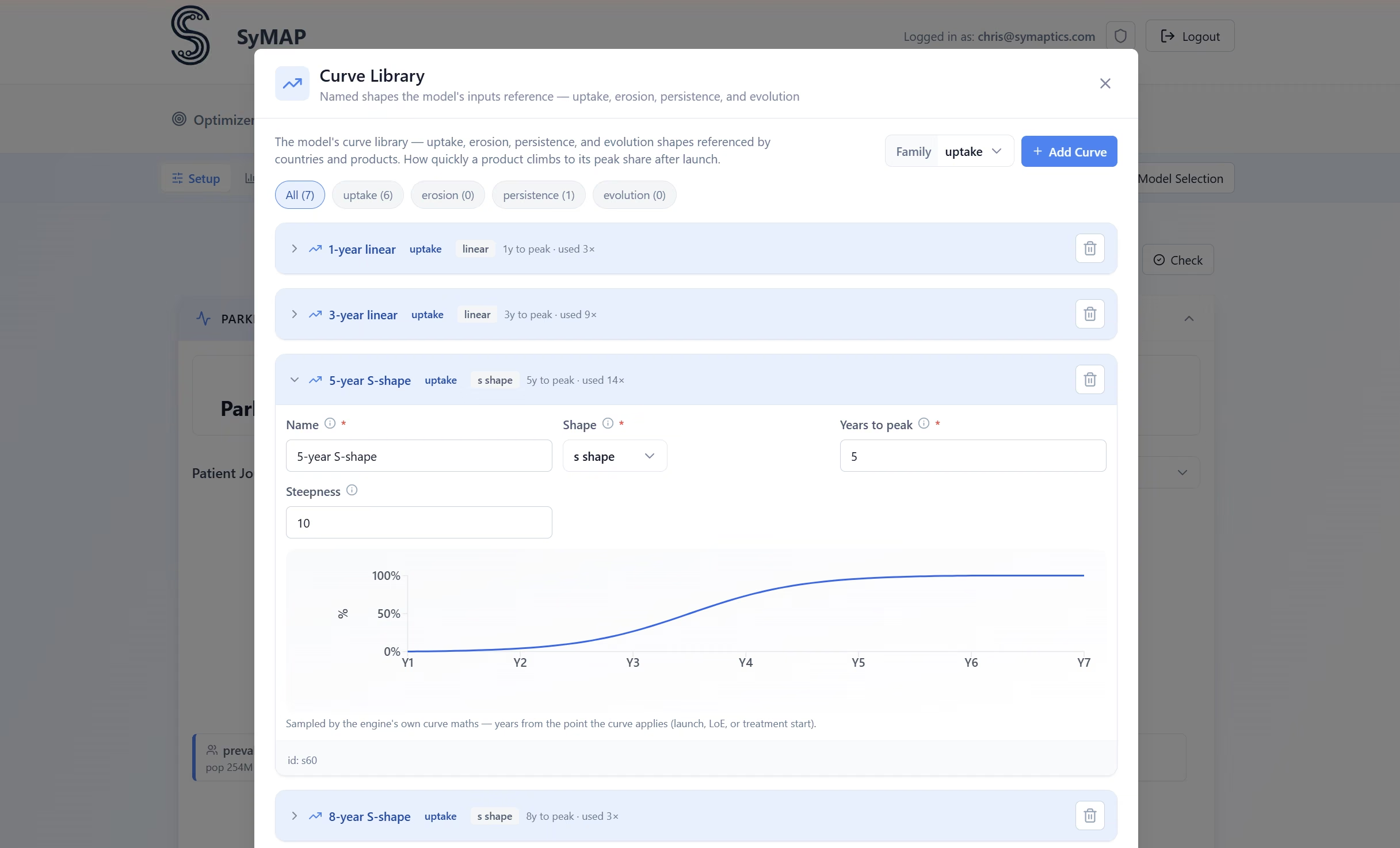
- Patient Forecasting: ground the volume line in real epidemiology, with incidence, prevalence, diagnosis and treatment flow as a connected model, adjustable uptake, erosion and persistence curves, and a library of archetypes and calibrated examples to start from
- Policy-Path Attribution: forecast under voluntary, CMS-model or baseline policy paths, with revenue attributed channel by channel so you can see where the exposure actually sits
- Custom Formula Builder: build your own reference-price formulas for IRP and share them across the team
- Threshold Analysis: find the price point where an outcome flips, instead of hunting for it run by run
- Replay on Today’s Setup: markets move, so replay a winning set of levers against your updated assumptions and get an honest then-versus-now comparison before acting on it
- Governed AI: AI throughout the platform with permissions by role, a confirmation on every change it proposes, a full audit trail, and monthly spend limits
- Integrations and Excel: run simulations from your own systems, and connect an Excel workbook straight to SyMAP
- Enterprise Ready: multi-factor sign-in, your own branding, and per-team control over exactly which features each user sees
The short version
Reference pricing and MFN were two models that had to be reconciled by hand. In 2.0 they are one run that ends in revenue. The voluntary agreement is now a deal you can design and price against the CMS models, with the tariff trade-off in the same picture. And Optimizer Studio searches the strategy space instead of leaving you to test it one scenario at a time.
If your pricing answer currently arrives as three exports that disagree with each other, that is the problem this release was built for.
See it on your portfolio
Screenshots only get you so far. The fastest way to understand what 2.0 changes is a live walkthrough on your markets, your portfolio and your questions, from a single IRP cascade through to a full voluntary-agreement decision. If you would rather have the analysis than the software, we also run this as a pricing analysis project.
Chris McDonald PhD
Director & Founder, Symaptics
info@symaptics.com