
SyMAP IRP is live. International reference pricing models are not new; they have been built and relied on for years. What has been missing is one that lives in a browser, that a pricing team can run without a specialist sitting next to them, and that explains its own results. That is the tool.
Originally published September 2025, when SyMAP IRP first went live, and left here as written. The platform has grown a long way since: SyMAP MFN and SyMAP Global Pricing have joined it, and IRP itself has picked up custom reference formulas and threshold analysis. For where things stand now, see Introducing SyMAP 2.0 and the full release notes.
A price agreed in one market rarely stays in that market. Drop a price in Germany and, depending on whose reference basket Germany sits in and when each of those countries next runs an assessment, that one decision can resurface in half a dozen other prices over the following two years.
None of that is news, and neither is modelling it. Reference pricing has been simulated for about as long as it has existed, usually in spreadsheets, and often very well. The analysis is not the missing piece.
The modelling was never the problem
What surrounded the model was the problem.
A good IRP workbook tends to belong to the person who built it. It runs on their laptop. It breaks when somebody sorts a column. Extending it to three more countries is a week of work, and when a result looks wrong the only person who can say why is the author. A model can be genuinely rigorous and still be unshareable, and once it is unshareable it stops being a team’s tool and becomes one person’s liability.
The alternative on offer has been enterprise pricing software: capable, expensive, and configured over several months by people who then understand it better than you do. So the choice was either owning something fragile or renting something you cannot steer.
SyMAP IRP is the third option. The same modelling, in a browser, without the setup being a project in its own right, with the reasoning visible on screen and an assistant that will explain any number in it.
What actually changes
It lives in a browser
Log in, build a model, share it with the people who need it. Nothing to install, no file called final_v7, no single point of failure who happens to be on holiday. The model outlives whoever set it up, and everyone is arguing about the same simulation.
The rigour is still there
Configurable baskets, four referencing modes, assessment cycles per country, price types, FX with the date attached, multi-year timelines. Everything a careful workbook does, without the fragility that comes free with it.
The AI is inside it
Not a chat box bolted to the side. It reads the same results you are looking at, explains what drove them, and can make changes when an administrator has allowed that action and a person has confirmed it.
What is in the release
The modelling layer covers what a serious IRP model has to cover, because a tool that is easy to use and wrong is worse than a spreadsheet:
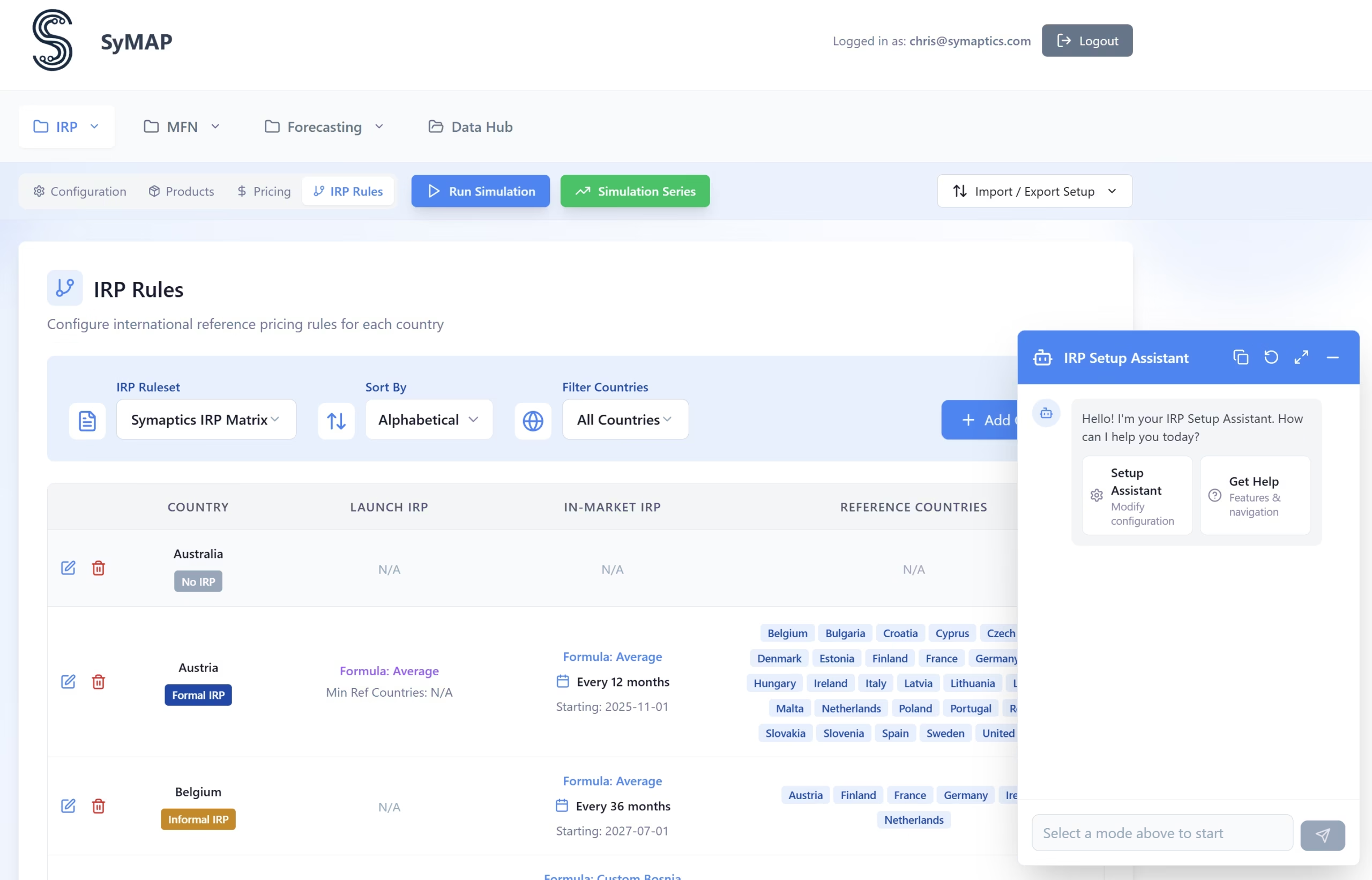
- Configurable reference baskets, assessment cycles and price-drop limits, country by country
- Four referencing modes: exact brand and pack, same brand any pack, same pack size any brand, or all brands and packs, because authorities do not all match comparator products the same way
- Ex-manufacturer, wholesale and net price types, with the FX source and date shown beside every conversion
- Multi-year timelines: launch dates, withdrawals, scheduled increases and generic entry, per market
- Assessments that recalculate when each country would actually recalculate, not on one shared annual tick
- Scenario comparison, and simulation series that sweep a price across a range at whatever increment you set and orchestrate the runs for you
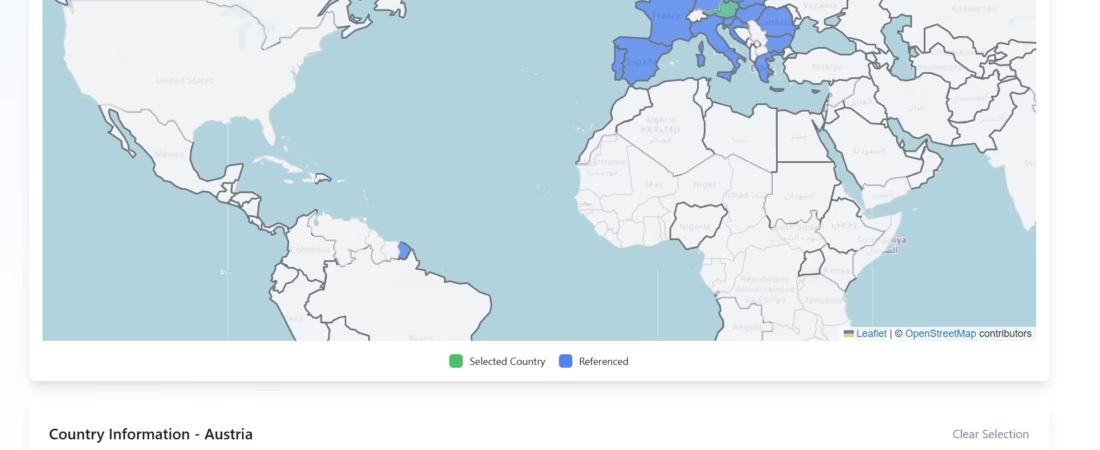
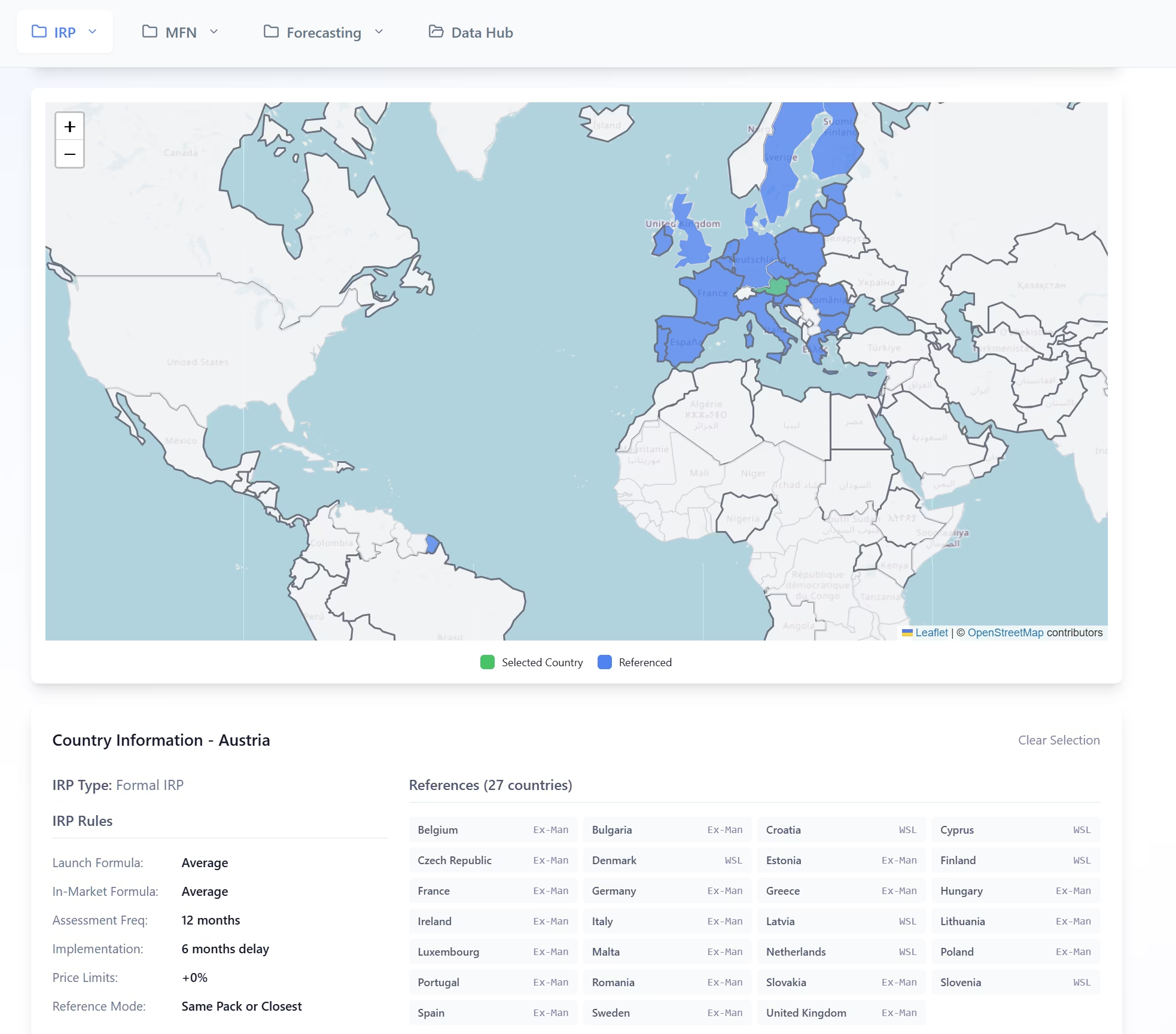
- An interactive map of the reference network, so you can see which markets look at which
Showing the working, by default
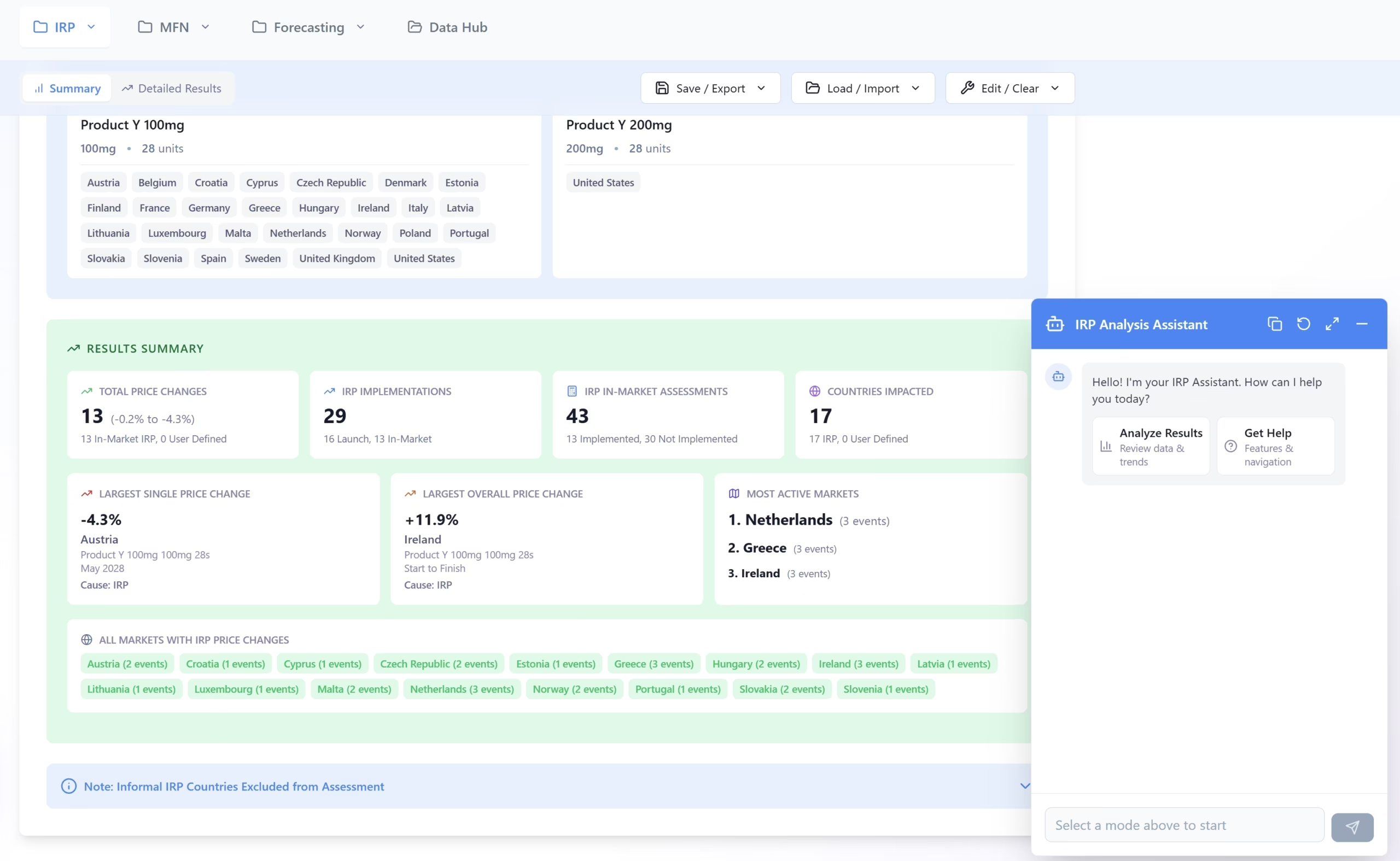
A spreadsheet can show its working too, if you know which tab to open and you are the person who wrote the formula. Here that is just how the tool behaves. Every result opens up: the formula applied, the basket it drew from, the products matched inside that basket, the exchange rate and the date it was taken, and the assessment event that set it off. An event log records each recalculation in sequence, and it exports.
That matters because reference prices get argued over, internally at review and externally with authorities and partners, and a number you cannot reconstruct is a number you cannot defend. Making the audit trail the default rather than an archaeology exercise is most of the point.
The AI layer sits on top of that rather than in place of it. It reads the same outputs you can read, then writes up what drove them: which markets moved the result, where the sensitivities sit, what a given scenario means in language you can put in front of a commercial team. When it proposes something, it points at the calculation it is reasoning from, which means you can go and disagree with it on the evidence.
That is partly taste and partly governance. With the EU AI Act obligations now phasing in, being able to say how a system reached a recommendation is becoming a condition of using it at all, and pricing sits close enough to regulated decision-making that we would rather be early than retrofit it.
Keeping the assistant on a leash
An assistant that can change your model is only useful if it cannot change it quietly. The controls are deliberately dull:
- An administrator defines which actions the assistant may propose, per workspace
- Every proposed change waits for a person to confirm it
- Permissions are set by role, and by area of the workspace
- Actions, confirmations and rejections are logged, and the log downloads
The surrounding plumbing is ordinary enterprise fare: authenticated access with role-based permissions and email verification, CSV and JSON import, Excel and CSV export, and an API for pulling results into whatever you already report from. Excel is still where a lot of the downstream work happens, and we would rather feed it than fight it. Hosting is flexible, so tell us what your security team needs rather than the other way round.
Who we built it for
Two situations, mostly. Teams with a reference pricing model that only one person can safely open, and teams with no model of their own who buy the analysis in. In both, the questions are much the same:
Launch sequencing
Which order to enter markets in, and what each order costs in reference erosion over five years.
In-market changes
What a price adjustment in one country does to the rest of the portfolio, and when.
Loss of exclusivity
What happens when a market that others reference faces generic entry.
Making the case
Producing a version of the analysis that survives being questioned, with the assumptions attached.
What comes next
SyMAP IRP is the first module, not the plan. Two things are already pulling at us.
The first is the United States. This May’s executive order on Most Favored Nation pricing has put international prices directly into the American debate, and if that turns into workable policy then every ex-US price quietly becomes a US pricing input. Teams would then need to model both at once, from one dataset, rather than reconciling two models that disagree. We think that is where this work has to go next.
The second is money. A price simulation is half an answer; what people want to know is what it does to revenue over the planning horizon. Connecting reference prices to volumes and forecasts is the natural other half, and it is on the list.
Both will follow the same rules as this release. Real country logic, calculations you can inspect, and an assistant that asks before it acts.
The short version
International reference pricing modelling is old. Doing it in a browser, with the workings on display and an assistant that explains them, is the part that has been missing. We are not claiming to have invented the analysis. We have made it something a pricing team can own and use, instead of a workbook one person guards or a platform someone else configures.
If your reference pricing currently lives in a file only one person can safely open, that is the problem this is aimed at.
Chris McDonald PhD
Director & Founder, Symaptics
info@symaptics.com